
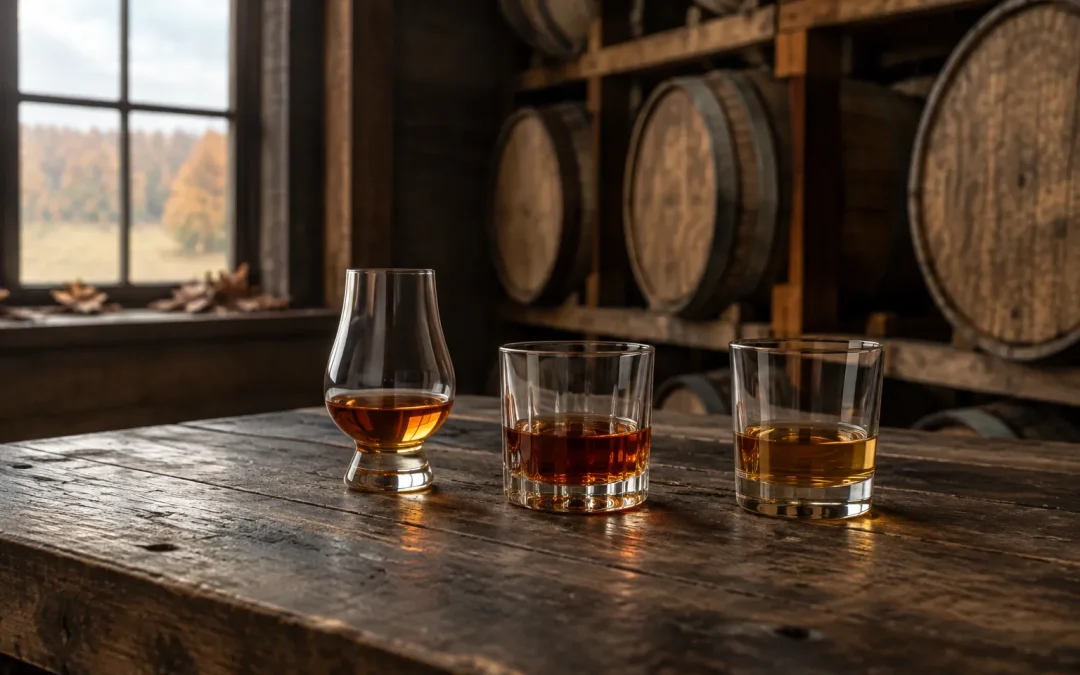
Three November 2026 bourbon releases deserve a closer look, though none calls for a verdict based on an announcement alone. Woodinville has introduced a 10-year bourbon and a six-year bottled-in-bond expression. In Kentucky, Jeptha Creed has released the fifth batch of its Red, White & Blue bourbon, while Larrikin has announced a nine-year cask-strength single-barrel series. Their specifications and routes to market tell different stories. Some important details remain unreported.
These items were announced or reported between November 2 and November 9, within the past ten days as of November 11. They are separate from the releases covered in our October bourbon news roundup.
What these November 2026 bourbon releases have in common
Age and proof are useful facts, but they answer narrow questions: how long the whiskey spent in a barrel and its strength when bottled. They do not establish how it tastes or whether its price makes sense to a particular drinker. For this roundup, the more practical questions are what distinguishes each release, where the producer says it will be sold, and which specifications have not been disclosed.
Woodinville closes an age-series chapter—but the two bottles have different sales plans
A November 9 report on Woodinville’s Harvest Release identifies two Washington bourbons: Woodinville 10 Year Bourbon and Woodinville 6 Year Bottled in Bond. The 10-year follows the distillery’s eight-year release in 2024 and nine-year release in 2025. Woodinville describes it as both its oldest whiskey to date and the final bottle in that series. That makes the announcement more than a routine increment in age: drinkers following the sequence now know it has an announced endpoint.
The 10-year is bottled at 100 proof, with a suggested retail price of $129.99. Its stated mash bill is 55% corn, 35% rye and 10% malted barley, rather than the 72% corn, 22% rye and 6% malted barley listed for Woodinville’s standard bourbon. The report also describes barrels made with 24-month open-air-seasoned staves, then heavily toasted and lightly charred. Those are meaningful production distinctions for anyone comparing the two Woodinville recipes. The producer’s claims about what those choices do for flavor, however, are not independent tasting evidence. Source: Woodinville release details reported by Fred Minnick.
The six-year bourbon is also 100 proof, with a suggested price of $69.99. Woodinville says it came from one distillation season and aged in Barrelhouse A in Quincy, Washington. The Alcohol and Tobacco Tax and Trade Bureau’s explanation of bottled-in-bond rules provides context: the designation requires whiskey from one distiller, at one distillery, in one distilling season; at least four years of bonded storage; and bottling at 100 proof. Woodinville’s stated six years exceeds that minimum. The announcement does not identify the exact distillation season or give this bourbon’s mash bill.
There is also an availability distinction worth catching. The November 9 account introduces both whiskeys as launching nationally, but specifies that the 10-year is planned for select retailers nationally and the producer’s website, while the bottled-in-bond bourbon is to be sold exclusively through that website. It says both were at the Woodinville distillery while supplies lasted. Those stated channels do not establish that a particular buyer can receive an online shipment or find a bottle locally.
Jeptha Creed’s fifth Red, White & Blue batch marks a Kentucky anniversary
Jeptha Creed announced Batch 5 on November 2, with availability beginning November 7. The Shelbyville distillery ties the release to its tenth anniversary: it opened on Veterans Day in 2016. This year’s charitable partner is K9s For Warriors, and Jeptha Creed says a portion of proceeds will benefit the organization. The announcement does not specify the portion or a minimum donation, so bottle sales cannot be translated into a known contribution.
The producer calls Batch 5 a Kentucky straight bourbon and gives it a $74.99 suggested retail price. It lists the distillery gift shop, its online spirits shop and select retail locations in 40 states as sales channels. The published announcement does not provide a batch-specific proof, age statement or mash bill. It would be a mistake to fill those gaps using specifications from a prior year’s bottle. For someone interested in this edition, the confirmed anniversary connection and stated charitable arrangement are clearer than its technical differences from earlier batches.
Larrikin’s Foxtrot offers nine years and cask strength, but not a fixed proof
Larrikin Bourbon Company’s announcement published November 4 by the Kentucky Distillers’ Association introduces Foxtrot as a nine-year-old, cask-strength single-barrel bourbon. The suggested price is $110. Larrikin lists its Lawrenceburg distillery, select Kentucky retailers and national private selections as availability routes.
“Single barrel” matters here because bottles selected from different barrels need not have identical characteristics; “cask strength” also does not supply a single numeric proof for the entire series. Larrikin has not published a Foxtrot barrel count, bottle count, proof range or specific states for those private selections in the announcement. It gives the mash bill for its earlier Echo series, not explicitly for Foxtrot. Assigning Echo’s recipe to the new bourbon would turn an unconfirmed assumption into a specification.
For a Kentucky visitor, Foxtrot’s stated distillery availability is more concrete than the phrase “nationally as a private selection.” For a drinker elsewhere, that phrase signals a possible route to a bottle, not a nationwide shelf release. The nine-year age statement is notable for a single-barrel launch, but neither age nor cask strength settles how any particular barrel will perform in the glass.
The useful distinction is between a release and a bottle in hand
As of November 11, the clearest takeaway is not that these bourbons belong in a ranked list. Woodinville has ended an age-series run while giving its two new bottles different sales channels. Jeptha Creed has attached its annual batch to a documented anniversary and a charitable partner without publishing several batch specifications. Larrikin has set out Foxtrot’s age and format, but left barrel-level details open. Those differences are what a reader can use now; quality and local availability remain separate questions.
Sources were checked at the time of publication. Availability and pricing can change.