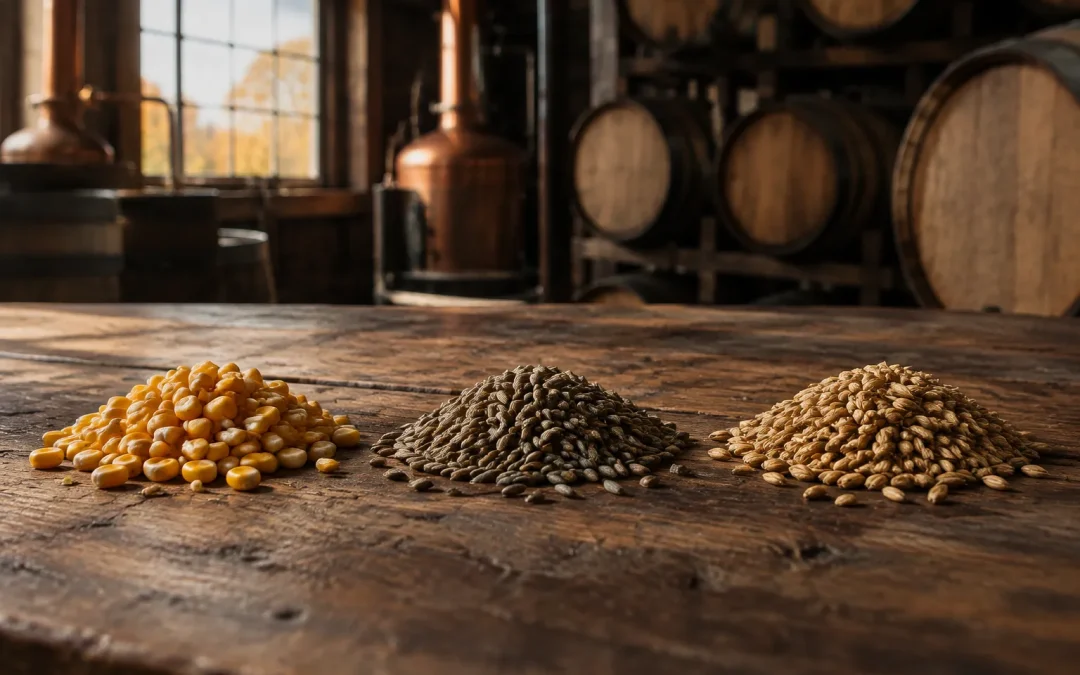
Liberty Pole High Rye Bourbon is scheduled to join the Washington, Pennsylvania, distillery’s permanent lineup on October 23, 2026. That makes this an upcoming launch, not a bottle whose retail availability has already been confirmed. The useful news for bourbon drinkers is the recipe: 51% corn, 40% rye and 9% malted barley. Liberty Pole is putting rye close to the limit while keeping corn just high enough for bourbon’s defining mash-bill requirement. Fred Minnick’s October 20 report of the announcement provides the release details; TTB’s bourbon-labeling examples explain the 51% corn threshold.
Liberty Pole High Rye Bourbon: the confirmed specifications
Liberty Pole says the new High Rye Straight Bourbon is a blend of barrels aged at least four and a half years and will be bottled at 100 proof. Its announced suggested retail price is $55, plus tax. The company describes it as an ongoing addition to its core range rather than a one-time batch. It has not announced a bottle count or identified specific retailers in the release report.
Those details establish the planned product, but they should not be read as a shelf sighting. October 23 is the stated release date; it does not establish when any particular shop will receive a bottle. The report also does not specify bottle size, distribution states, online-shipping terms or how much of each barrel went into the blend. None of those gaps changes the stated recipe or price. They do matter to anyone trying to compare shelf prices or plan a purchase from outside southwestern Pennsylvania.
The name can cause confusion. Forty percent rye is a substantial share of a bourbon mash bill, but this is not rye whiskey. The announced 51% corn keeps the grain recipe on the bourbon side of the line. Rye contributes to the recipe; it does not by itself guarantee a particular aroma, level of spice or drinking experience. The TTB guidance distinguishes bourbon’s grain requirement from the separate requirements for its production and maturation.
Why the wheated bourbon comparison is interesting—and limited
Liberty Pole also makes a Wheated Straight Bourbon. The company says both that whiskey and the new high-rye release are blends with the same minimum barrel age, the same 100 proof and the same $55 suggested price before tax. That gives interested drinkers a straightforward question to explore: how do two bourbons from one producer differ when rye, rather than wheat, plays the prominent supporting-grain role?
It is a useful comparison, but not a controlled experiment. Matching proof, a minimum age and an announced price does not mean the bottles use identical corn, yeast, barrel locations, maturation times or blending decisions. “At least four and a half years” sets a floor for the barrels in each blend; it does not say every barrel was filled on the same day or aged for exactly the same length of time. A difference between the two finished whiskeys therefore could not automatically be credited to rye versus wheat alone.
Age wording is worth reading carefully here. TTB explains that when whiskey of different ages is blended, an age statement generally reflects the youngest whiskey unless the producer provides the ages and proportions of the components. TTB also accepts statements such as “aged at least” a specified number of years. Liberty Pole’s announced minimum is useful information about the blend, not evidence of its oldest component or an average age. TTB’s age-statement guidance sets out that distinction.
What the announcement does not establish
The October 20 report relays Liberty Pole’s explanation that the recipe draws on Pennsylvania’s rye-whiskey tradition. That provides context for the unusually rye-forward bourbon mash bill, not independent evidence of how the finished whiskey tastes. The announcement contains no authenticated tasting notes from this publication. There is no sound basis here for declaring the bourbon especially spicy, balanced or better than the wheated expression.
Nor does “permanent” promise uninterrupted stock. It describes the producer’s plan for the lineup. Initial quantities, future batch consistency and distribution beyond the release location remain unconfirmed in the available announcement. The $55 figure is a suggested price before tax, not a verified price at every retailer. These are ordinary distinctions, but they are especially important when a release date is still ahead.
For a bourbon drinker, the strongest reason to pay attention is specificity rather than scarcity. Liberty Pole has supplied an exact grain breakdown, a minimum barrel age, proof and a suggested price, while positioning the bottle alongside an existing wheated bourbon with several matching headline specifications. Someone curious about grain choices has a clearer basis for asking questions than a vague “high rye” label alone would provide. Someone seeking a guaranteed local bottle—or a prediction of flavor—does not yet have enough information.
The Pennsylvania setting is also a reminder that bourbon is not defined by a Kentucky address. The federal bourbon criteria concern how and where in the United States whiskey is produced, not a requirement that it come from Kentucky. Readers interested in the older associations behind the name can explore our history of bourbon, while treating this announcement on its own stated terms.
The bottom line
As of October 21, Liberty Pole High Rye Bourbon is a documented October 23 launch plan, not a confirmed nationwide arrival. Its 51% corn and 40% rye mash bill makes the grain choice unusually clear, and its shared proof, minimum age and suggested price with the distillery’s wheated bourbon create a meaningful comparison. Actual shelf availability, full blending details and the experience in the glass remain open questions.
Sources were checked at the time of publication. Availability and pricing can change.